
Introducing Kanera
For months now, our whole company has been quietly running on a tool nobody outside our team could see. Today that changes. We’re releasing Kanera – the system we built to manage our own tasks and handle coordination – to everyone.
This is the story of why we built it, what it does, and why we’re confident enough to put our name on it.
The problem we couldn’t stop running into
We’ve spent more than fifteen years building software for other people, enterprise apps, across more industries than we can count. We know our way around complex systems. And yet, year after year, the thing that slowed us down most wasn’t the engineering. It was keeping track and coordinating our own work.
We had projects to plan, follow-ups to assign, clients to update, decisions to document, and a constant need to answer one deceptively simple question: *what actually changed since yesterday?*
So we did what everyone does. We tried the tools available to us. So many of them…
Each one solved part of the problem and created a new one. The simple ones were fast but fell apart the moment our work got real and their limitations showed. The powerful ones could model anything, and demanded a week of setup and a full-time admin to keep them sane. Some looked great in a demo and felt slow and clunky by day three. And the open-source alternatives we kept hoping would save us too often turned out to be half-baked side projects, lacking the polish and reliability you need to run a real business.
And so we never achieved the ideal process flow we wanted. Tasks lived on a board, the context behind them ended up in notes, the updates happened in chat, the decisions got buried in a thread someone half-remembered, and the small follow-ups, the ones that quietly matter most, just disappeared.
Progress became something we had to chase, manually, person by person, every single week.
The honest truth is that most teams don’t fall behind because they lack tools. They fall behind because the tools around them are too heavy, too scattered, too rigid, or too far removed from how the work actually happens.
We got tired of software that didn’t fit. So we built our own.
What Kanera actually is
Kanera is a fast, polished workspace where all of your team’s work lives in one place: planning, progress, context, and the day-to-day momentum that’s normally so hard to see.
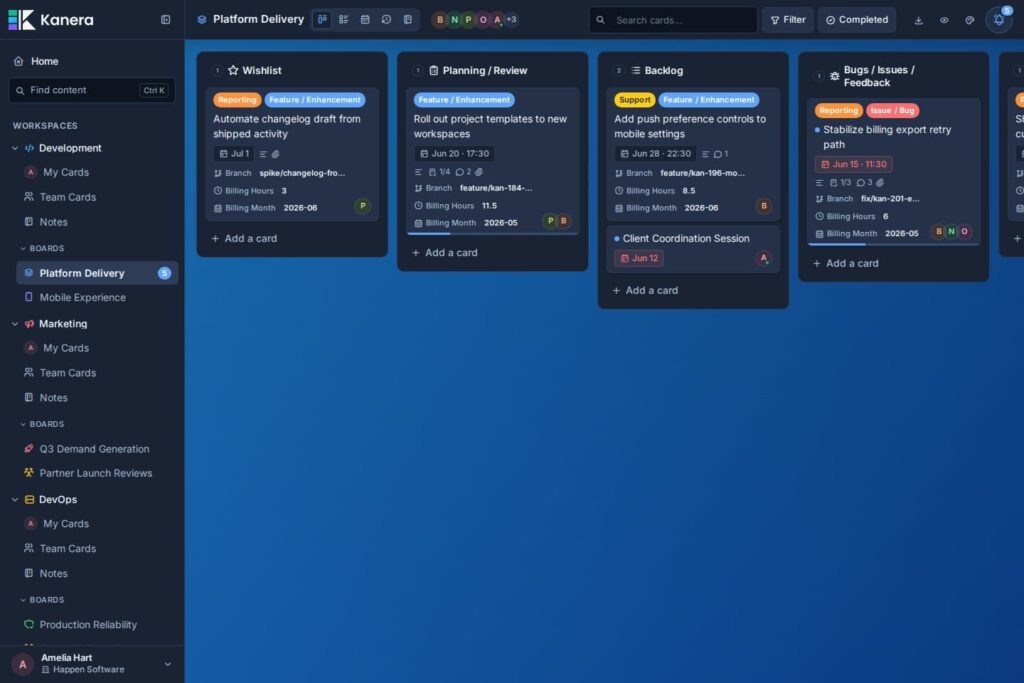
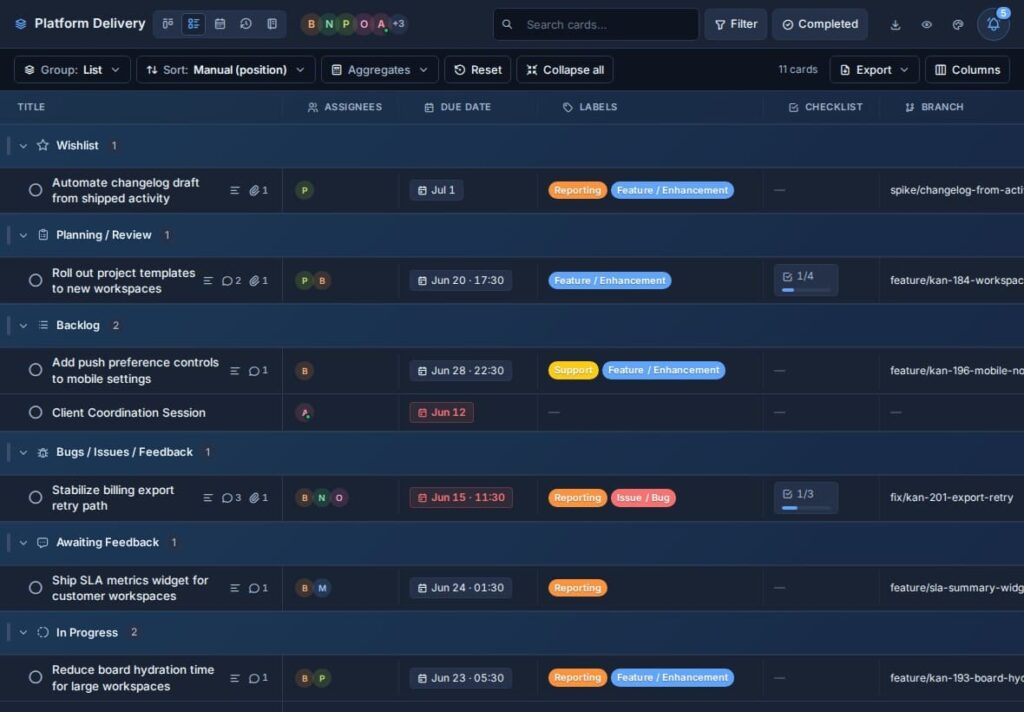
The whole thing is built around a simple belief. Work management should feel lighter, not like another job on top of the job. You plan visually on boards, drop into list or calendar views when you need structure, and everyone has a clear view of what’s actually on them through Assigned Work. There is a Work Done view to track who did what exactly on previous days. The context that usually goes missing, the notes, the comments, the files, the history of what changed and why, stays right next to the work it belongs to, instead of scattered across five other apps.
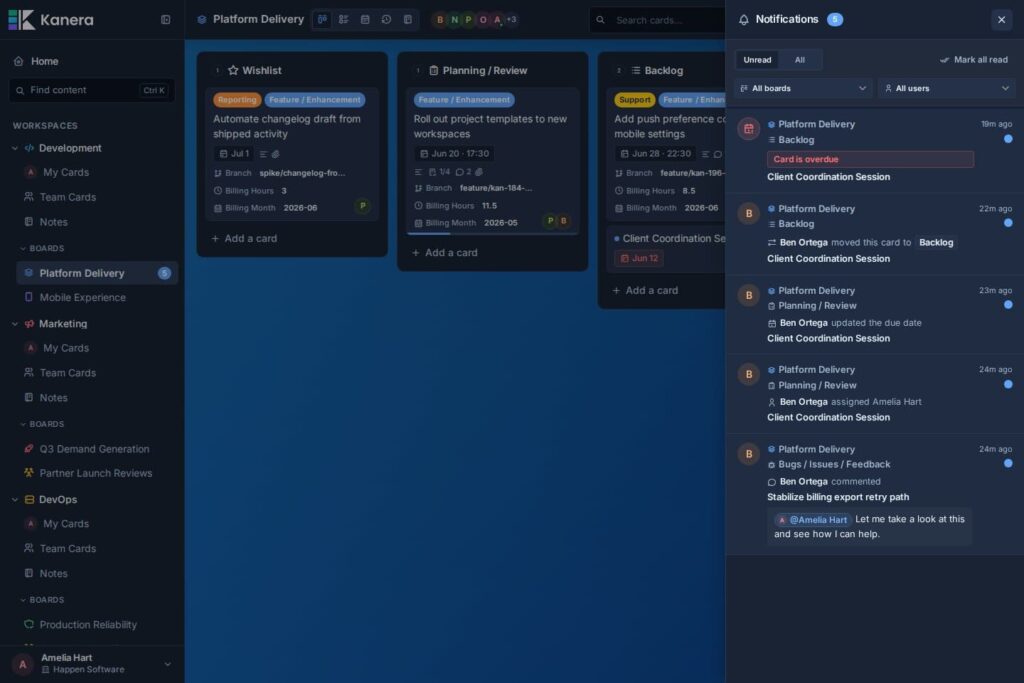

And the chasing? We handed most of it to the software. Automations and notifications keep things moving on their own, so progress surfaces itself instead of waiting for someone to go digging. When you outgrow the basics, the power is there too: guests and permissions for working with clients, a proper API, webhooks, and a Trello import that brings your existing work across in seconds, without starting from scratch.
There’s one modern piece we’re especially proud of: Kanera ships with native MCP support. In plain terms, the AI tools your team already uses, Claude and Codex included, can securely read and act on your workspace directly, with your permission. That’s not a bolt-on hack for a legacy tool that was never designed for it. It’s built in from the start, because that’s increasingly how teams want to work.
What Kanera deliberately isn’t is an everything-app. We didn’t want to build a sprawling suite that does forty things adequately. We wanted one tool that does the core of work management genuinely well, and gets out of your way the rest of the time. More than a basic board, less than a heavyweight suite. Focused, fast, and practical.
We didn’t launch this to find out if it works
Here’s the part we care about most.
Plenty of products launch as a hopeful first draft, looking for early users to tell them whether the idea holds up. Kanera isn’t that. We’ve been running our own company on it for months. Our planning, our operations, our client updates, the lot. It’s not a side project we dogfooded for a sprint. It’s the tool we genuinely use daily and our team loves it.
So when we say Kanera is ready, we don’t mean ready to be tested. We mean it’s the same workspace we already trust to run real businesses.
Software you can actually see inside
There’s one more decision we made on purpose. Kanera is source-available.
We’ve always wanted a project that we can build a community behind. So we made sure Kanera could form a community and wasn’t a black box. You can read the actual code that runs your workspace, see exactly how your data is handled, and trust what’s happening underneath instead of taking it on faith. It’s the transparency we wanted as customers ourselves, and now it’s yours.

For the teams who care about that kind of thing, you already know why it matters. For everyone else, it’s simply there if you ever want it.
Try it, it’s free to start
We built Kanera to make managing your tasks, your operations, and ultimately your business genuinely easier. To take the work about the work off your plate, and give you back a single, clear, fast place where everything lives. It’s done that for us. It’s done that for our clients. We’d love for it to do the same for you.
Getting started takes minutes. There’s a free plan to begin with, Pro is $5 per user a month ($3 if you pay annually), and every account opens with a 30-day Pro trial, no card required.
The best way to know if it fits is to bring a real, live project into it and see how it holds up against the way your team actually works.
No card required · 30-day Pro trial · Free plan available · Source-available